In a nutshell
- 🧪 Vinegar’s acetic acid dissolves limescale and loosens oily residues, promoting streak-free evaporation by lowering surface tension.
- 🧻 Make reusable vinegar wipes: 1:1 for daily use, 2:1 for hard water; wring nearly dry and buff with a clean microfibre cloth.
- ⚠️ Safety first: never mix vinegar with bleach, avoid natural stone and mirror edges, and refresh the solution weekly to prevent odours.
- 🔬 Mirror anatomy matters: protect the reflective backing by keeping liquid away from edges; minimal residue equals a streak‑free finish.
- 🧼 Troubleshooting: wash microfibre without softener, pre-treat make-up and hairspray spots, and use controlled passes to prevent hazing and smears.
British bathrooms are unforgiving places for glass. Steam hangs in the air, hard water dries in chalky crescents, and fingerprints arrive as if by appointment. Yet a simple fix keeps cutting through the chaos: vinegar wipes. Dipped in household acetic acid, they leave mirrors bright without the tell-tale tracks. The trick isn’t magic, it’s chemistry. Vinegar is mild, cheap, and nimble on mineral film and cosmetic residue. Used with a decent microfibre cloth, the solution flashes off quickly and resists smearing. The result is a swift routine that respects your time and your lungs. Clean glass, minimal effort, no synthetic fragrance haze.
The Chemistry Behind Streak-Free Shine
At the heart of vinegar’s prowess is acetic acid, a weak organic acid with a split personality: a polar carboxyl head that binds to mineral salts and a tiny non‑polar tail that can disturb light oily films. That dual nature helps it loosen two common nuisances on mirrors—limescale from hard water and waxy residues from cosmetics—without relying on heavy surfactants that often dry into visible trails. In typical kitchen vinegar (about 5% acetic acid, pH ~2.4), the acid reacts with alkaline deposits, converting stubborn calcium carbonate into soluble salts that wipe away. Simultaneously, the lowered surface tension encourages water to sheet rather than bead, cutting the risk of streaks as the liquid evaporates.
Glass itself is largely inert silica, so dilute acetic acid won’t etch it as some harsher cleaners can. That matters for clarity. Because vinegar evaporates relatively quickly and leaves minimal solids, there’s little to dry on the surface and form tracks. The final piece is mechanical: a clean, lint‑free microfibre cloth lifts loosened grime from the microscopic pits on a mirror’s surface, preventing smears that re-deposit as shadows.
Making and Using Vinegar Wipes Safely
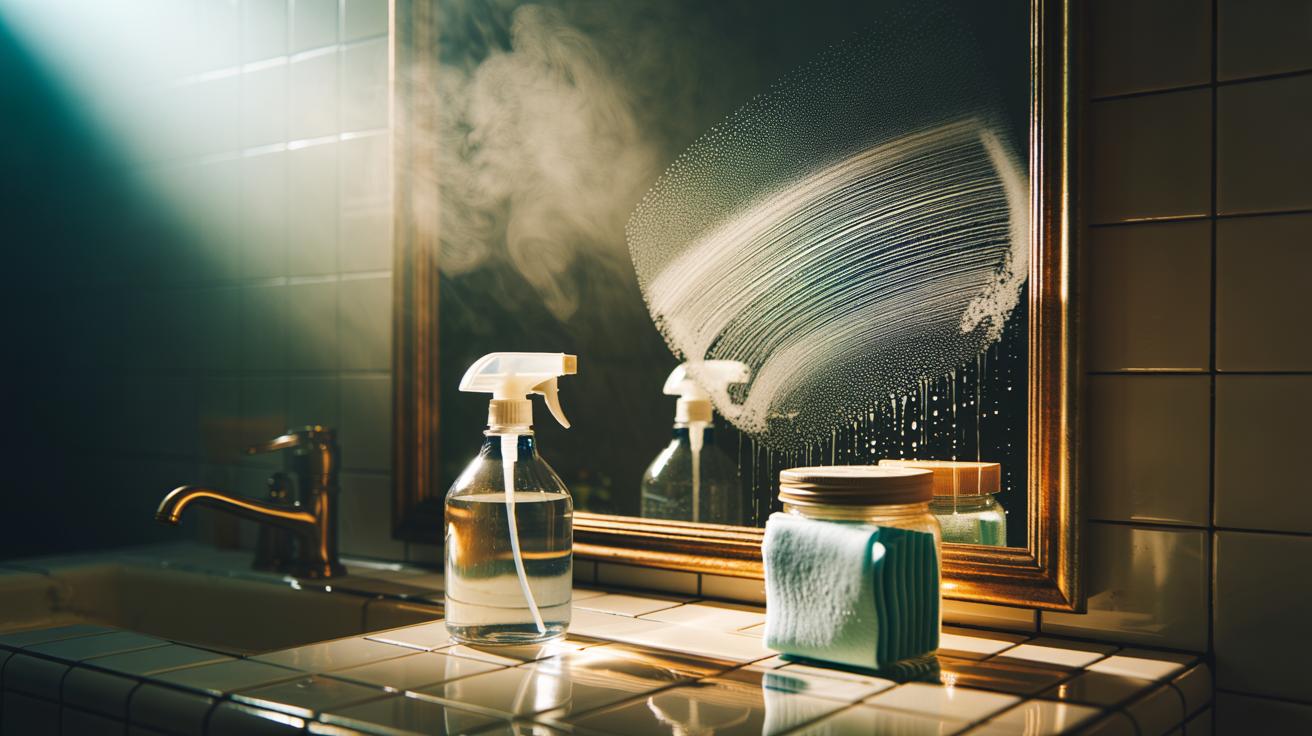
Set-up is simple. Pack a stack of clean cotton squares or microfibre cloths into a wide glass jar. Mix distilled white vinegar and water at 1:1 for everyday mirrors; shift to 2:1 vinegar for heavy limescale. Some professionals add 10–20% isopropyl alcohol for faster flash‑off, useful in humid bathrooms. Pour the liquid over the cloths until saturated but not swimming. Seal. To use, wring a wipe nearly dry, sweep the mirror in a big Z pattern, then buff immediately with a second dry microfibre. Work quickly. Tiny amount, big shine. Never mix vinegar with bleach or chlorine products—this can release toxic gas. Also keep vinegar away from natural stone and unfinished wood; acids can mark them.
| Mix Ratio | Contact Time | Best For | Avoid | Notes |
|---|---|---|---|---|
| 1:1 (vinegar:water) | 30–60 seconds | Daily smears, toothpaste mist | Stone surrounds | Fast, low odour; safe on glass |
| 2:1 | 1–2 minutes | Hard-water spots | Mirror edges if saturated | Keep liquid away from backing |
| 1:1 + 15% IPA | Under 30 seconds | Humidity, quick turnover | Near open flame | Faster drying, streak insurance |
Test on a small corner if you suspect coatings or antique silvering. Store wipes sealed; refresh the solution weekly to prevent musty odours. Dispose of spent liquid down the sink with plenty of water.
Why Mirrors Love an Acidic Touch
Streaking isn’t just a cleaning failure; it’s a physics story. Detergent residues and dissolved minerals increase the surface tension of rinse water, so droplets sit and dry in defined edges that scatter light. A mild acid such as acetic acid neutralises alkaline films, chelates calcium, and lowers the liquid’s surface tension. The result: water sheets thinly and evaporates cleanly, leaving little behind to catch the eye. The real secret is minimal residue. Vinegar brings that by design, unlike some fragranced cleaners that deposit glossing agents which can smear under bright vanity lights.
There’s also the matter of the mirror’s construction. The glass front is robust, but the reflective layer—aluminium or silver—sits at the back. Excess liquid seeping under the edge can attack that backing over time. That’s why pros wring wipes nearly dry and keep passes clear of the perimeter. Short strokes around fixtures, broad strokes in open glass, and immediate dry buffing protect the backing while delivering a uniform, streak‑free finish that flatters any room.
Troubleshooting Common Mirror Messes
Make-up fallout. Hair spray. Toothpaste shrapnel. Each leaves a different signature. For cosmetics rich in silicones and waxes, pre‑treat dots by dabbing with a corner of your vinegar wipe, wait ten seconds, then lift—don’t rub—before the main Z pass. Hair spray overspray binds dust into a dull film; the 2:1 vinegar mix breaks it faster, but you must follow with a dry buff to prevent hazing. Toothpaste carries abrasives; flick off any dried chunks with a soft card before wiping so you don’t scratch the surface. When in doubt, use less liquid and more controlled passes.
If streaks persist, the culprit is usually the cloth. Wash microfibre without fabric softener, which coats fibres and smears. Assign one cloth as “wet” and one as “dry” and keep them that way during a session. In cold rooms, warm the glass slightly by running a hot shower first; a mild temperature rise speeds evaporation and reduces ghosting. For antique mirrors with delicate silvering, work only on the centre panel and stop short of the edge, then finish with a light, dry polish. With these tweaks, vinegar wipes outpace complicated kits and deliver newsroom‑deadline speed.
In a world of over‑engineered sprays, a jar of vinegar wipes is disarmingly effective. The science is sound, the kit is frugal, and the results photograph well—a trifecta for households and studios alike. With a measured hand, a decent microfibre, and a dash of acetic acid, bathroom mirrors stop fighting and start cooperating. Keep liquids scant, keep edges dry, and buff immediately. That’s the formula. What would your ideal routine look like if you swapped pricey glass cleaner for a home‑made stack of vinegar wipes—what tweaks would you make to suit your mirrors, your water, and your light?
Did you like it?4.6/5 (27)