In a nutshell
- 🧪 The science: acetic acid disrupts hydrogen bonds and protonates adhesive groups, so sticky residues from sugars and labels loosen quickly—often within 30–60 seconds.
- 🧽 How-to: use white vinegar (neat or 1:1 with water), wet the spot, wait briefly, then wipe in overlapping S-strokes with microfibre; finish with a rinse and dry buff.
- ⚠️ Safety essentials: never mix vinegar with bleach, test on hidden areas, keep contact brief on delicate finishes, and rinse food-contact surfaces to avoid lingering taste.
- 🧼 Surface guide: great on glass, stainless, glazed tile, sealed laminates; avoid marble, limestone, travertine, and be cautious with unfinished wood, rubber seals, and low‑grade acrylics.
- 💡 Pro tips: add a drop of washing-up liquid for greasy-sugary messes; for stubborn labels, apply gentle heat then vinegar—fast, low-cost, and streak-free results.
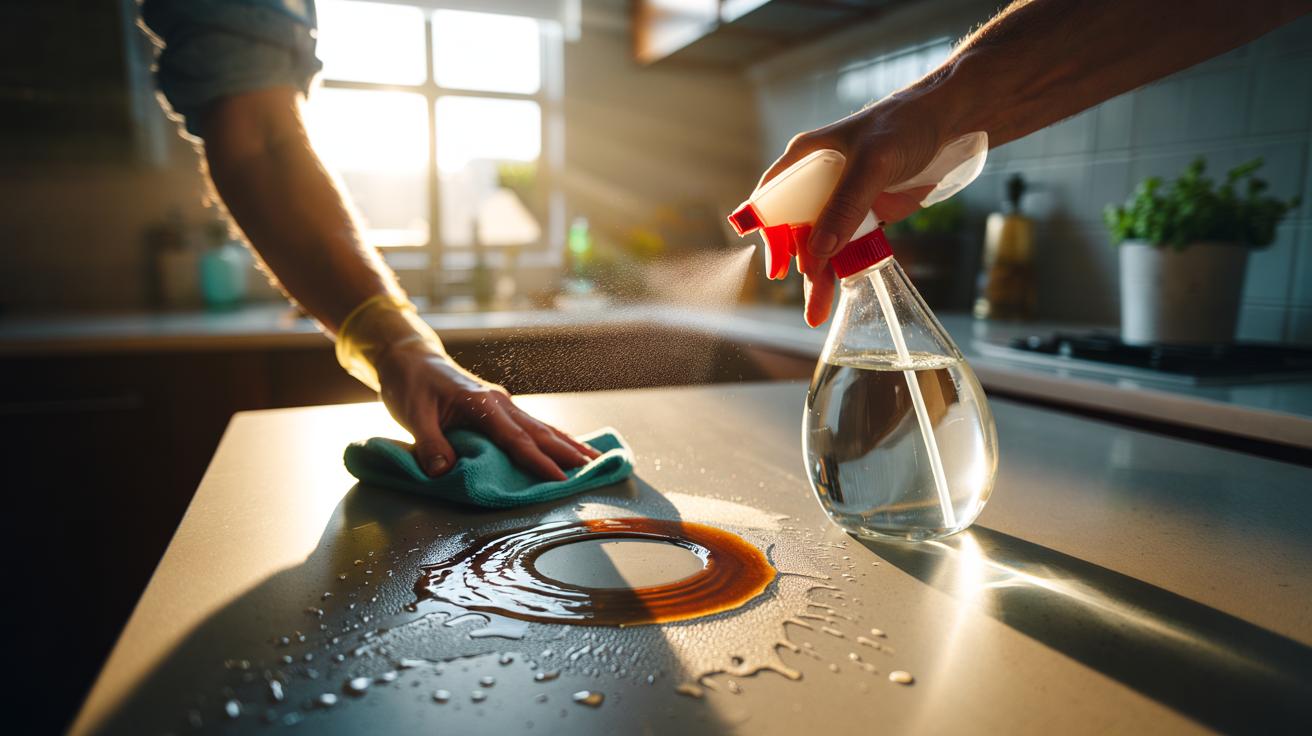
There’s a simple, swift way to banish the gummy rings of syrup, jam smears, and sticker shadows that cling to kitchen worktops. Reach for white vinegar. Powered by acetic acid, this pantry staple acts fast, loosening gluey residues and lifting film without heavy scrubbing or harsh solvents. In a matter of seconds, tacky patches lose their grip, and a quick microfibre pass leaves counters bright. It’s cheap, food-safe on most surfaces, and easy to rinse. For everyday stickiness, vinegar delivers speed and clarity in one wipe. Here’s how it works, why it’s so quick, and how to use it safely on the materials in a typical UK kitchen.
Why Acetic Acid Dissolves Sticky Residues Instantly
Sticky messes cling because of chemistry. Sugary spills dry into networks of hydrogen-bonding molecules; label glues and tape adhesives bind with a mix of polymers, plasticisers, and weak electrostatic attractions. Acetic acid cuts through that web on two fronts. First, as a polar, protic molecule, it interferes with hydrogen bonds, so dried syrups and caramelised sugars loosen their hold. Second, its acidity (pH ~2.5) protonates functional groups in many water‑based adhesives, weakening their grip on the surface. Add a touch of mechanical action, and the residue rolls up and wipes away.
Speed is the surprise. Vinegar wets fast, infiltrates micro‑pores, and lowers local pH where the residue is thickest. That softens the top layer immediately, so the first wipe already carries away most of the muck. Give it 30–60 seconds of contact time on stubborn spots; you’ll see the gummy sheen turn dull as bonds break. Because vinegar is miscible with water, a quick rinse or a damp cloth resets the surface, and a dry pass eliminates streaks. For resinous stickers, repeat once. For sugary rings, one go usually suffices.
How to Do the Fast Vinegar Counter Wipe
Start with white vinegar (5–8% acetic acid). For everyday stickiness, use it neat. For general film on sealed laminates and stainless steel, a 1:1 mix with water is ample. Spray or drizzle just enough to wet the patch—no puddles. Let it sit for half a minute on resilient residues. Then wipe in overlapping S‑strokes with a clean microfibre, folding the cloth to expose fresh sides as it loads up. Follow with a damp cloth to lift any loosened film, then dry buff for a streak‑free finish.
Two small but vital cautions keep the routine safe. Do not mix vinegar with bleach or chlorine‑based cleaners; it can release hazardous fumes. And on unknown surfaces, test a hidden corner. Sticky label ghosts on glass? Vinegar, wait, wipe, then a final rinse. Jam on a sealed wooden countertop? Work quickly, rinse, dry. If you encounter a waxed surface, re‑wax after cleaning; acids can thin protective films. A tiny drop of washing‑up liquid boosts wetting on greasy-sugary blends, but rinse thoroughly to avoid smears.
Safe Surfaces and What to Avoid
Vinegar excels on glass, stainless steel, sealed laminates, glazed tiles, and most modern sealed composites. It’s also helpful on silicone‑residue halos left by old labels on jars. Keep it away from calcareous stone—marble, limestone, travertine—and from concrete that isn’t fully sealed. Acids react with calcium carbonate, causing irreversible etching. On natural wood, brief, targeted use is usually fine, but standing moisture can swell fibres; wipe dry promptly. For enamel hobs and fridge interiors, vinegar is a strong everyday option, especially for sugary spills that caramelise near heat.
| Surface | Suggested Dilution | Contact Time | Notes |
|---|---|---|---|
| Glass, Ceramic, Tile | Neat or 1:1 | 15–60 sec | Rinse and dry to prevent spots |
| Stainless Steel | 1:1 | 15–30 sec | Wipe with grain; dry buff |
| Sealed Laminate/Composite | Neat | 30–60 sec | Test matte finishes for streaking |
| Natural Stone (Marble, Limestone) | Avoid | — | Risk of etching |
| Unfinished/Waxed Wood | Sparingly, then rinse | Under 30 sec | Re‑wax if finish dulls |
Rubber seals and some natural stone composites can dull if soaked repeatedly; keep exposure brief and wipe dry. Plastics tolerate vinegar well, though prolonged contact may haze low‑grade acrylics. If a label adhesive proves acrylic‑based and stubborn, warm the area with a hairdryer first, then apply vinegar—heat mobilises plasticisers, and the acid completes the release. Acetic acid is food‑safe in these dilute forms, but for food‑contact surfaces, a water rinse keeps flavours neutral and the kitchen smelling fresh.
The Chemistry Behind the Speed: Polarity, pH, and Solvation
The magic sits at the crossroads of polarity and acidity. Many sticky residues contain polymeric sugars, esters, or proteins. Vinegar’s low pH protonates oxygen‑rich sites in these networks, reducing their ability to hydrogen‑bond tightly to a benchtop. At the same time, acetic acid’s small, polar molecules slip between residue chains and the surface, solvating and separating them. That’s why a syrup ring loses its gloss and wipes up in one go, while dry, pressure‑sensitive adhesives ball up and lift when nudged by a cloth’s micro‑loops.
There’s another advantage: selectivity. Vinegar is too mild to dissolve cured sealants or intact factory coatings quickly, yet strong enough to disrupt the weak forces making a mess tacky. It targets the bonds you want broken and leaves the rest alone—if you choose the right surface. Add a drop of surfactant (washing‑up liquid) and you lower surface tension, helping vinegar spread under the residue. The result is fewer passes, less elbow grease, and cleaner edges. For truly stubborn labels, alternate brief vinegar soaks with mechanical lift using a plastic scraper to avoid scratches.
In a kitchen that moves quickly, the fast vinegar counter wipe is a small revelation: a bottle, a cloth, a minute of patience, and the stickiest annoyances vanish. The science is simple, the habit easy to keep, and the outcome consistently clear. Use it where it’s safe, let it work for seconds, then finish with a rinse and dry. That’s it. From breakfast jam rings to last‑minute party prep, it’s the quiet hack that keeps surfaces honest. Where in your home could a precise splash of acetic acid save you the most time tomorrow?
Did you like it?4.4/5 (27)