In a nutshell
- 🧪 Acetic acid in white vinegar breaks down soap scum and limescale by converting calcium stearate/carbonate into soluble salts (plus CO₂), delivering a true no-scrub clean.
- 🧰 Use 5% white distilled vinegar; spray onto dry surfaces, apply a cloth or paper-towel compress, allow 10–30 minutes’ dwell time (up to 60 for heavy scale), then rinse and squeegee.
- ⚠️ Surface and safety rules: safe on glass, chrome, and glazed tile; avoid natural stone and unsealed cement; keep contact brief on grout/acrylic; never mix vinegar with bleach.
- 💷 Cost and performance: vinegar is low-cost and gentle; stronger commercial descalers (citric, sulfamic, formic) act faster on thick scale and for long soaks—choose by build-up and material.
- 🗓️ Prevention routine: clean when surfaces are warm, do weekly touch-ups, and adopt a post-shower spritz-and-squeegee to minimise future deposits, effort, and product use.
The Instant Vinegar Swap Ends Soap Scum Battles
Hard water leaves a stubborn ring of defeat on taps, tiles, and glass. You scrub. It smears. You scrub harder. It smirks back. The better move is to stop wrestling and switch tactics: use acetic acid, the mild acid in household vinegar, to dissolve the minerals that glue grime to surfaces. Let the chemistry do the heavy lifting while you make tea. This simple swap melts soap scum and limescale without abrasion, saving time, elbow grease, and fixtures. White distilled vinegar at 5% acetic acid is cheap, widely available, and surprisingly elegant in action. Done right, it’s a fast, low-odour, low-impact fix for bathrooms and kitchens that actually lasts.
Why Acetic Acid Dissolves Soap Scum and Limescale
Most shower grime isn’t “dirt” in a classic sense. It’s chemistry. Hard water delivers calcium and magnesium ions that react with fatty acid salts from soap to form calcium stearate, the waxy, grey film we call soap scum. At the same time, dissolved bicarbonates dry into hard calcium carbonate—better known as limescale. Both bond to surfaces and to each other, creating that gritty, cloudy build-up that laughs at neutral cleaners. Enter acetic acid. It donates protons that break these mineral bonds, converting insoluble deposits into soluble salts. The result: the scum unhooks from the surface and rinses away.
At a molecular level, acetic acid reacts with calcium carbonate to produce calcium acetate, water, and carbon dioxide. You may see a soft fizz as carbon dioxide escapes. Similarly, it protonates the stearate end of soap scum, undermining its cling and improving solubility. That’s why dwell time matters; the reaction needs contact to finish. Heat helps too, increasing reaction speed without increasing concentration. Compared with abrasive scrubbing, the acid route avoids scratching glass or chrome, preserves protective coatings, and reaches into micro-pits where brushes can’t.
How to Use Vinegar for a No-Scrub Clean
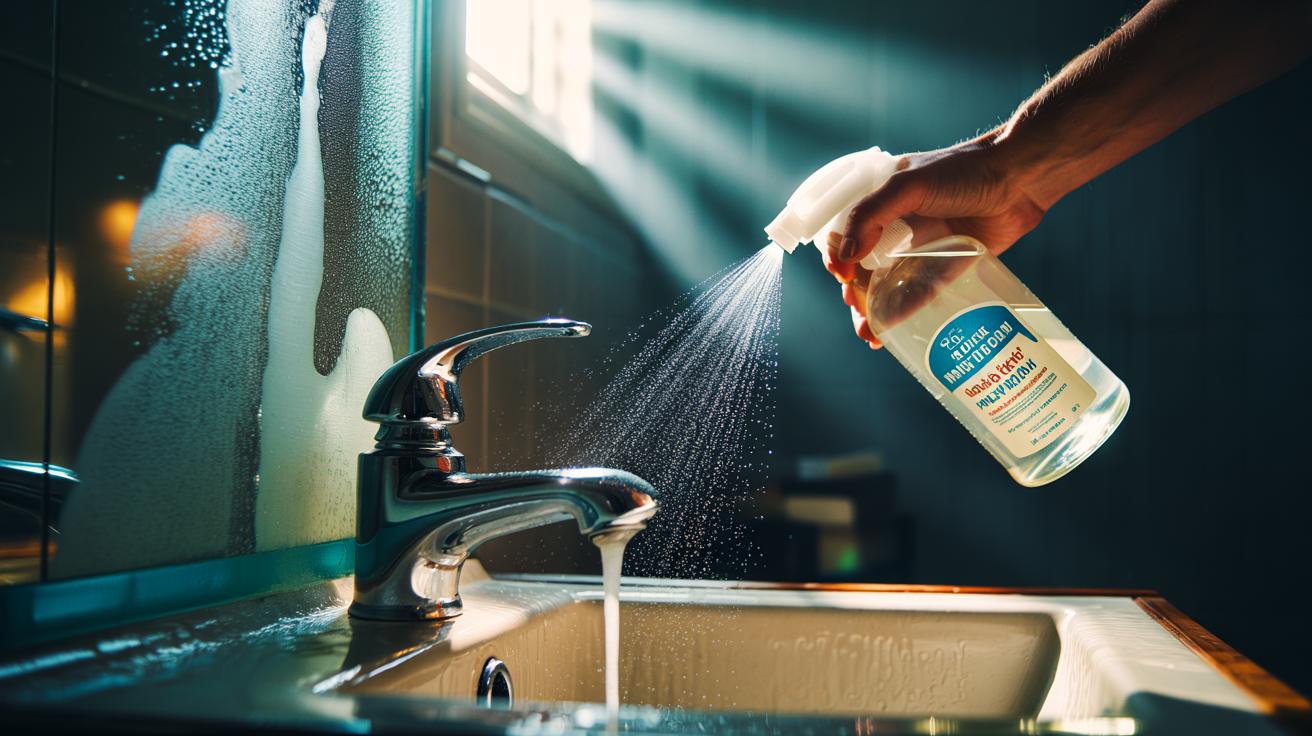
Choose plain white distilled vinegar (about 5% acetic acid). Warm it slightly for stubborn deposits. Spray onto dry surfaces until everything glistens. For vertical areas—shower doors, taps—press paper towels or a microfibre cloth into the wet vinegar to create a clinging “compress.” Wrap tap spouts with a vinegar-soaked strip and secure with a reusable tie. Leave it alone for 10–30 minutes; let the acid work. For heavy limescale, extend to 60 minutes and re-wet if it dries.
Rinse thoroughly with warm water. Wipe with a clean cloth. Any last ghosts usually rinse off after the first pass because calcium bonds are already broken. For glass brilliance, squeegee dry to stop fresh droplets depositing minerals. On grout, keep contact times shorter and rinse well. Never mix vinegar with bleach or products containing sodium hypochlorite—it releases toxic chlorine gas. If you need a degrease-and-descale combo, a 1:1 mix of warm vinegar and a few drops of mild dish soap boosts cling and wetting without harsh surfactants. Ventilate lightly; the smell fades as it dries.
Where Vinegar Works—and Where to Avoid It
Vinegar shines on non-porous, acid-resistant surfaces and most bathroom metals. But acids can etch or dull natural stone, unsealed cementitious materials, and certain finishes. Use the quick reference below to target smart and avoid mishaps.
| Surface | Safe? | Contact Time | Notes |
|---|---|---|---|
| Glass shower doors | Yes | 10–30 min | Use warm vinegar and compress for heavy scale. |
| Chrome/stainless taps | Yes | 10–20 min | Rinse and dry to prevent spotting; avoid prolonged soaking of plated finishes. |
| Ceramic tiles | Yes | 10–30 min | Safe on glazed tiles; avoid unsealed cement tiles. |
| Grout (sealed) | With care | 5–10 min | Short contact; rinse well. Test first. |
| Acrylic baths | With care | 5–10 min | Use diluted vinegar (1:1 with water); avoid abrasives. |
| Marble, limestone, travertine | No | — | Acid etches calcitic stone. Use pH-neutral or stone-safe cleaners. |
When in doubt, test on a discreet spot. Coated metals and specialty finishes vary; a few minutes can be fine, overnight is risky. Keep vinegar off rubber seals for long soaks; brief contact is typically fine, then rinse. If a surface says “no acids,” believe it—etching is permanent.
Vinegar vs Commercial Descalers: Cost, Speed, Sustainability
Household vinegar is inexpensive and predictable: about 5% acetic acid, no dyes, no perfume, no mystery. Cleaning vinegars at 6–10% work faster but can be overkill for daily maintenance. Commercial descalers often use stronger acids (citric, sulfamic, formic) plus surfactants and inhibitors. They’re faster on thick limescale, especially in kettles and boilers, and can offer metal protection for longer soaks. But for showers and taps, vinegar’s balance—effective yet gentle—wins most days. It’s the classic “mild acid, correct dwell time” equation.
Cost and climate count. Vinegar is low-cost per litre, available in refill stations, and kinder on wastewater than many synthetic blends. Packaging is simpler. The trade-off is scent and the need for patience: you must allow time for the reaction to complete. Hack the wait by cleaning after showers, when surfaces are warm and damp. For prevention, a quick post-shower spritz and squeegee slashes future build-up, meaning less acid, less water, less effort.
Acid beats abrasion when the enemy is mineral. That’s the quiet genius of the vinegar method: a small chemical nudge, then an easy rinse, and fixtures look new again. Build a routine around it—weekly touch-ups, monthly deep soaks where needed—and watch the shine endure. Skip the grind; let the reaction do the work. Ready to retire your scouring pad and try a smarter clean this week, or will you tweak the method to suit your own bathroom battlegrounds and report back with the results?
Did you like it?4.4/5 (25)